Workshop
Marlstone Press is a working letterpress house and bindery. We set type by hand, print on paper we have chosen sheet by sheet, and sew and case every copy in the same building — so a book leaves us having been made by people who could each name what they did to it.
We keep the three trades under one roof because the decisions belong together. A measure set too wide is a binding problem before it is a reading problem, and a paper chosen for its rattle will argue with an ink chosen for its bite. Working within arm’s reach of each other lets us settle those arguments early, at the bench, while a page is still cheap to change.
Composition
Our compositors work from a standing collection of some forty metal and wood faces, several of which exist nowhere else in usable quantity. Setting begins with a reading, not a specification: we look for the sentence that has to breathe, the caption that keeps orphaning, the passage where a wide measure will cost the reader more than it gains. The type is the argument. Only once the text has been read for its rhythm do we commit to a face, a measure and a leading — and then we pull a proof and read it again, because a page always argues back.
Printing
We print on three flatbed presses and one platen, all of them older than anyone operating them. Impression is set by feel against a made-ready sheet and checked under raking light, so the letter sits into the paper rather than on top of it. Mixing is done in daylight at the bench, from base pigments, against the actual stock rather than a swatch — an ink that reads warm on coated paper can turn grey on a soft rag sheet. We print short runs and we stop when the sheet stops being right.
Binding
The bindery sews, cases and finishes everything we print, and takes in conservation work for libraries and private collections. We fold to the grain, sew on tapes or cords depending on how the book will actually be opened, and choose boards for how a cover will behave in ten years rather than on the day. Gold is tooled by hand on a warmed finisher’s stove. Where a repair is needed we do the least that will hold, and we write down what we did and what we used, so the next person to open the book knows.
Makers
Fourteen people work at Marlstone. Between them they hold the compositors’ trade, four kinds of press, hand papermaking and a full bindery — and all of it is taught on, so none of it leaves when someone does.

Ilse Vardan
Director / Composition

Bram Coleridge-Ash
Director / Bindery

Marit Oyelaran
Director

Teodor Vance
Master Printer

Solveig Brannick
Papermaker

Amias Ferrow
Compositor

Odile Marchetti
Compositor

Nkechi Halloran
Pressman
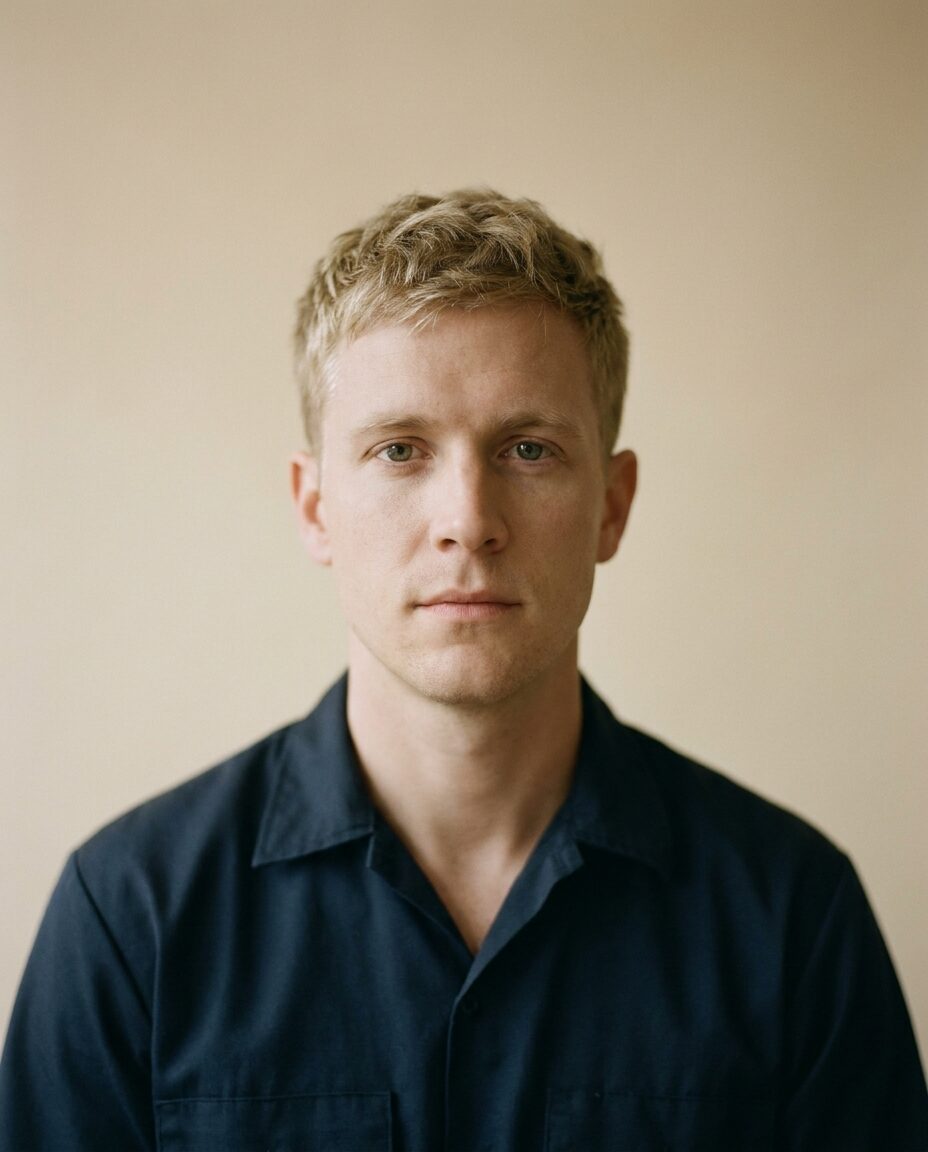
Rasmus Quill
Bookbinder

Junia Aldercott
Finisher & Gilder

Piet Vandermolen
Type Founder

Corah Findlay
Editor

Ewen Straithe
Conservator

Tamsin Roe-Okafor
Apprentice
Honours
Awarded
Northern Book Arts Honours 2025
Award for Hand Composition
A Field of Marl
Awarded
Northern Book Arts Honours 2024
The Deckle Award for a Bound Edition
Ninety Winters
Awarded
Guild of Letterpress Prizes 2025
Workshop of the Year
Marlstone Press
Awarded
Guild of Letterpress Prizes 2025
Distinction in Impression — Long Run
A Field of Marl
Awarded
The Vellum Prize 2024
Binding of the Year
Ninety Winters
Awarded
Papermakers’ Circle Awards 2024
Best Mill-Made Text Stock
Ninety Winters
Written About

The fifty workshops keeping a closing trade open
Since 1998 Marlstone Press has grown from a single platen in a rented arch to a house that sets, prints, makes paper and binds under one roof. Its refusal to separate the three trades has produced a body of work that other presses now send their apprentices to look at.

Teaching a fount to outlive its own foundry
Marlstone’s decision to cast its own replacement sorts has kept four faces in working service that would otherwise have been retired to display cases. Type founder Piet Vandermolen walks us through a pivotal caster on a Tuesday morning.
‘We stop when the sheet stops being right’
“There is no version of this where you make it faster and it stays good. The press will tell you when the impression has gone. The only question is whether anyone in the room is still listening to it.”